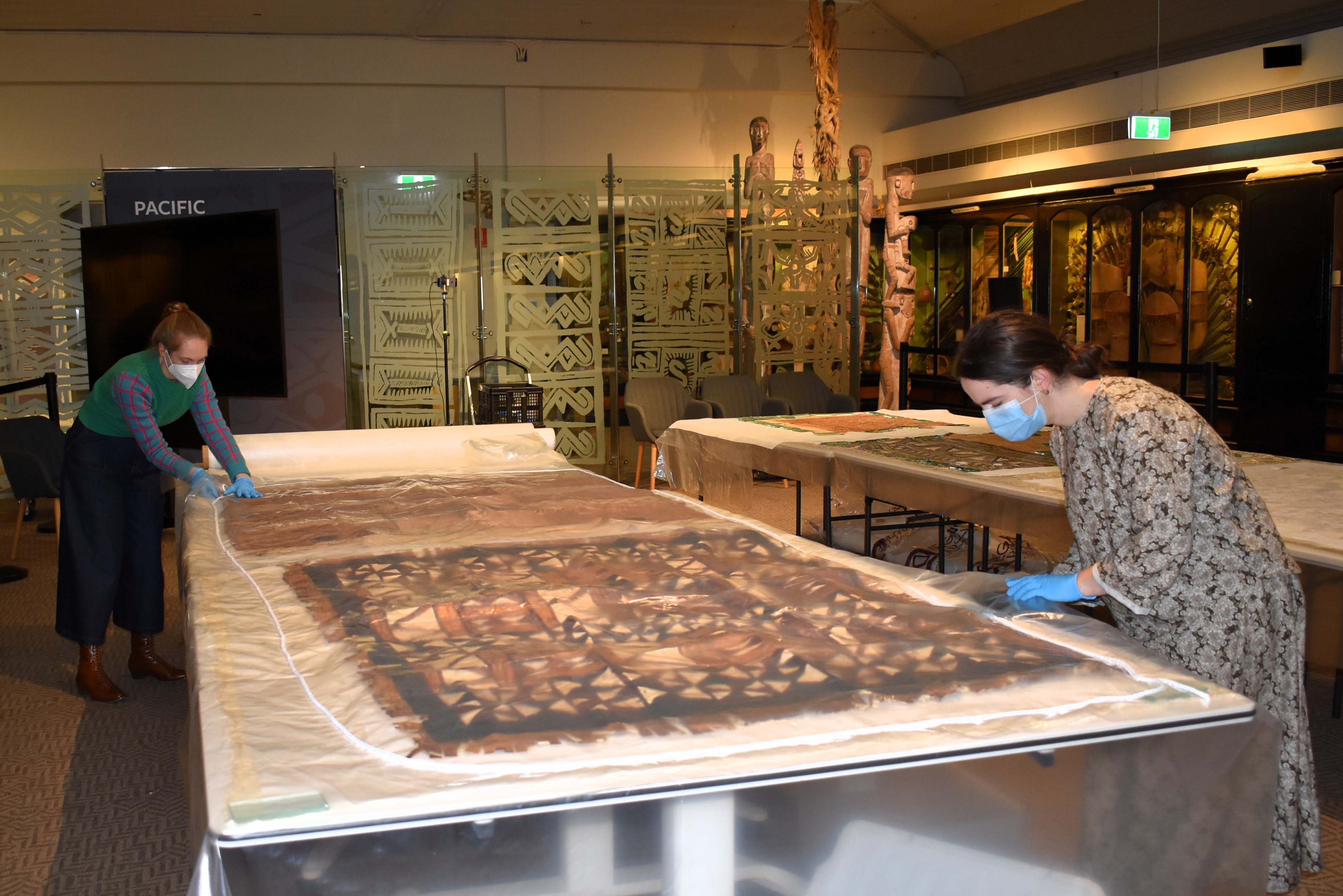
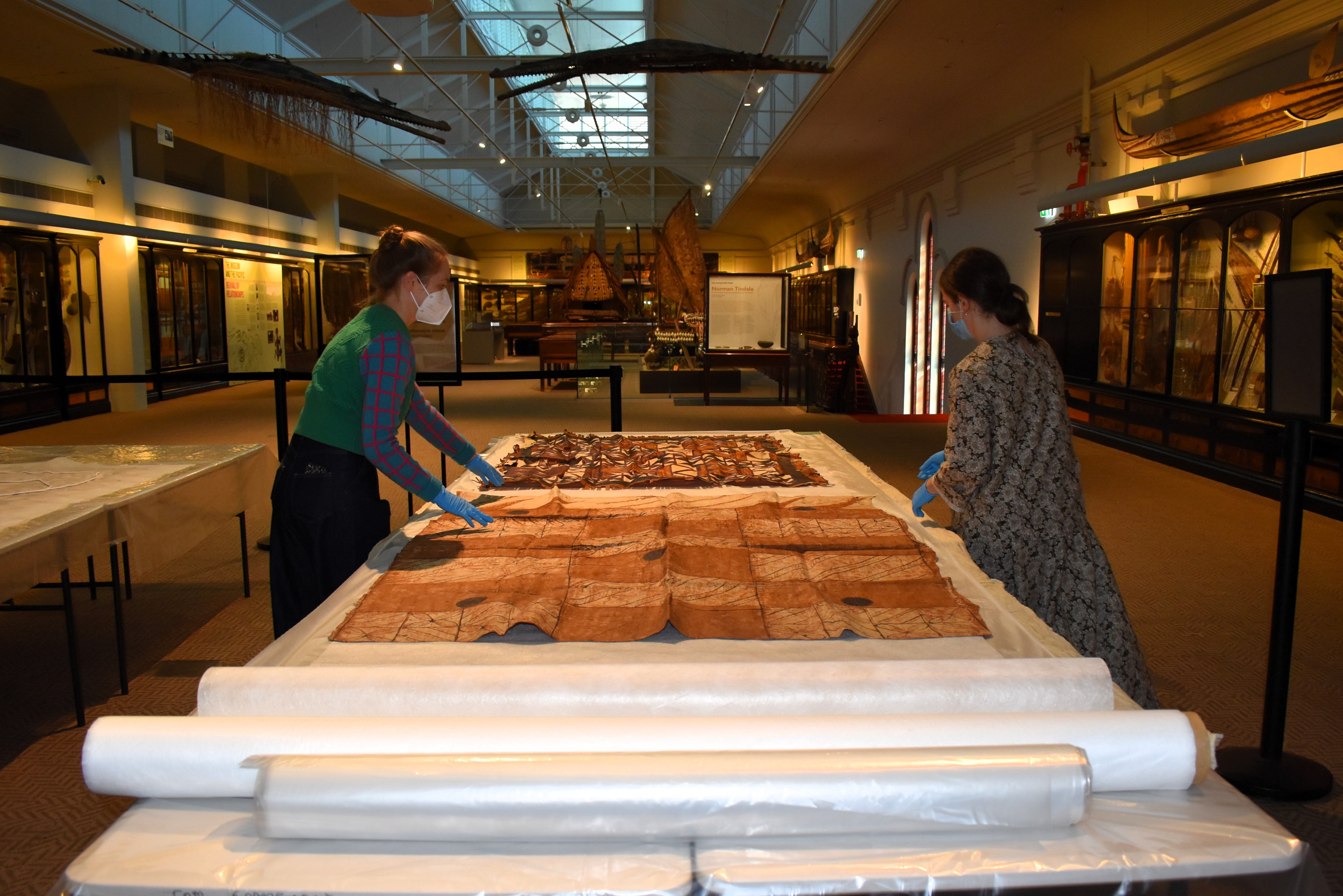
A three-year South Australian Museum project to preserve culturally-significant textiles from the Pacific islands is nearing completion.
The textiles, some dating back to the 18th century and known as tapa cloth or simply tapa, primarily come from Tonga, Samoa and Fiji.
The Museum has about 350 tapa in its collection, made from the inner bark of trees, typically the paper mulberry (Broussonetia papyrifera).
Pacific peoples carried cuttings of the tree as they travelled.
The bark is soaked and beaten into a fabric, which is often decorated and used in ceremonial clothing, for gifts and in decoration. It can range in size from small flat samples to large wall dividers and floor coverings up to 12m in length.
Tapa, which comes from Tahitian [ta = beaten, pa = plant], are also found in Africa, South America and Asia.
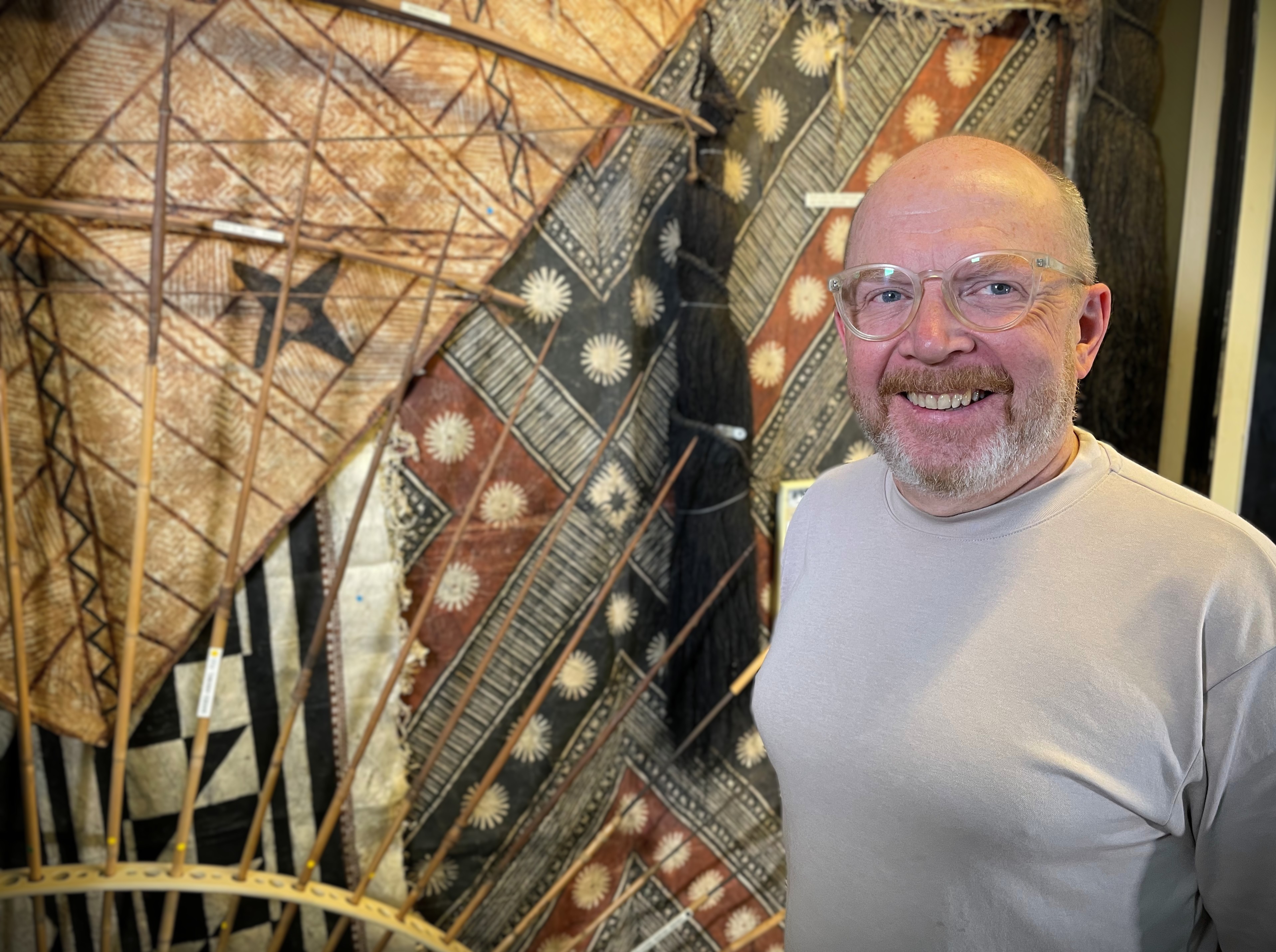
South Australian Museum Collection Development Co-ordinator Stephen Zagala said the Museum also holds a catalogue of small bark cloth specimens collected by Captain Cook during his three voyages through the Pacific from 1768 to 1779.
“So the Museum’s bark cloth collection constitutes a significant cultural asset,” he said.
Stephen said the tapa functions as a type of cultural skin in many Pacific communities.
“Bark cloth is lovingly wrapped around every stage of life, from the swaddling of newborns to the bundling of the deceased for burial,” he said. “It is often presented as a gift during marriages, graduation ceremonies and political exchanges.
“Large sheets can be used to partition rooms or line walls, while narrow bands function as bandages or oil lamp wicks.
“Bark cloth is also treated as a writing surface and inscribed with family genealogies, personal messages or newsworthy observations.”
The Museum has been collaborating with Artlab Australia, the state’s specialist centre for conservation of cultural collections, since 2022 to preserve the tapa, as part of the State Government’s Cultural Institutions Storage Facility (CISF) project.
They will be eventually placed in a dedicated storage facility, due to be completed in February.
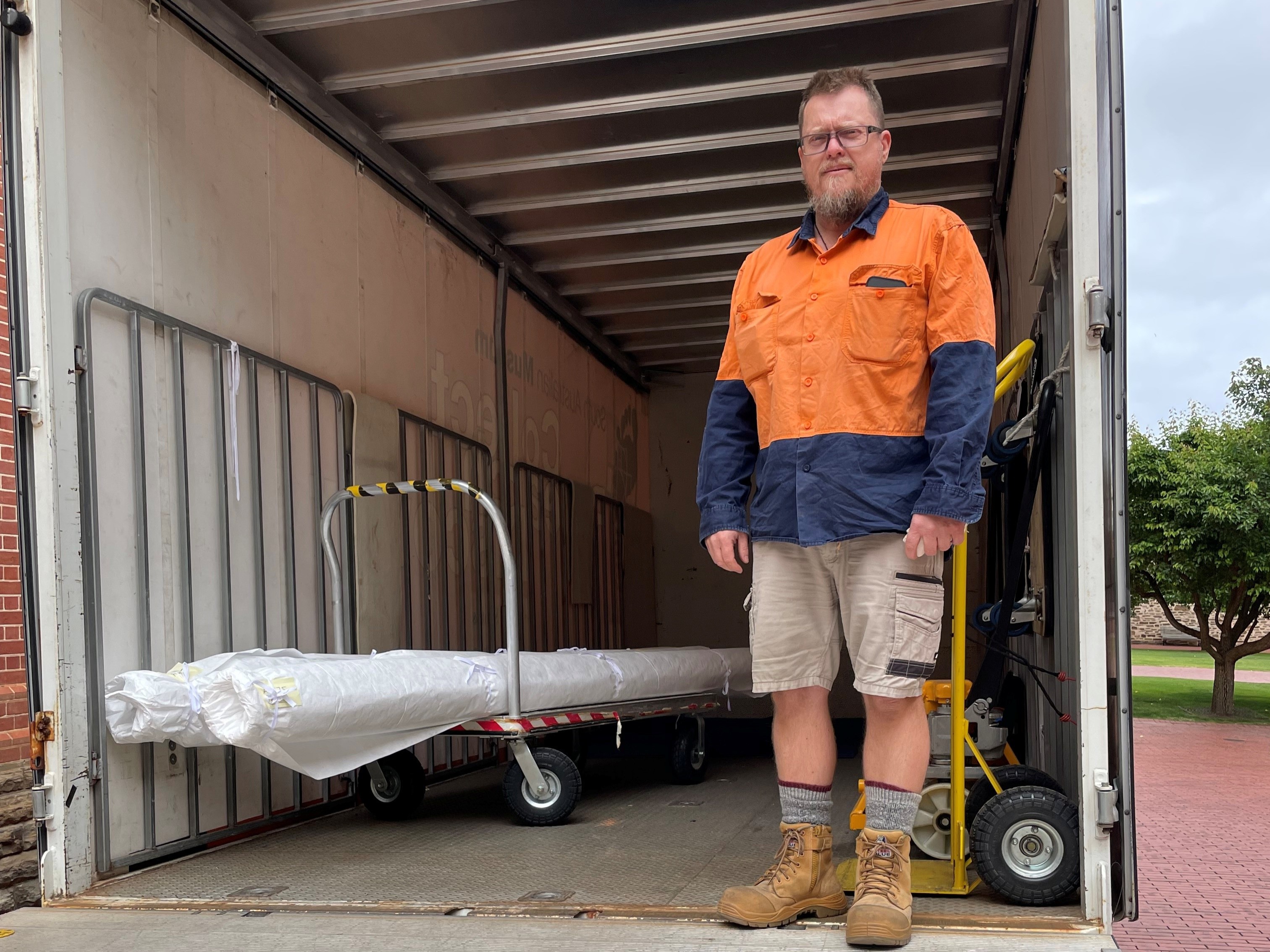
The facility will house the heritage collections of all the State’s cultural institutions, including the Art Gallery of South Australia, the State Library and the History Trust of South Australia.
The Museum’s stored collections and archive have been closed to the public for the move, at least until late 2026; the museum’s day-to-day public exhibitions have not been affected and visitors remain more than welcome.
Artlab Australia’s Principal Conservator Textiles Mary-Anne Gooden said the preservation project was often complicated by the large size and fragility of the tapa, which were previously folded and stored in boxes.
“Treatment preparation has involved humidification to relax folds and creases, and to enable flat tapa to be rehoused onto archival tube rollers,” she said.
Mary-Anne said some of the more complicated preservation work was done at Artlab’s facility neighbouring the Museum in the State’s cultural precinct on North Terrace.
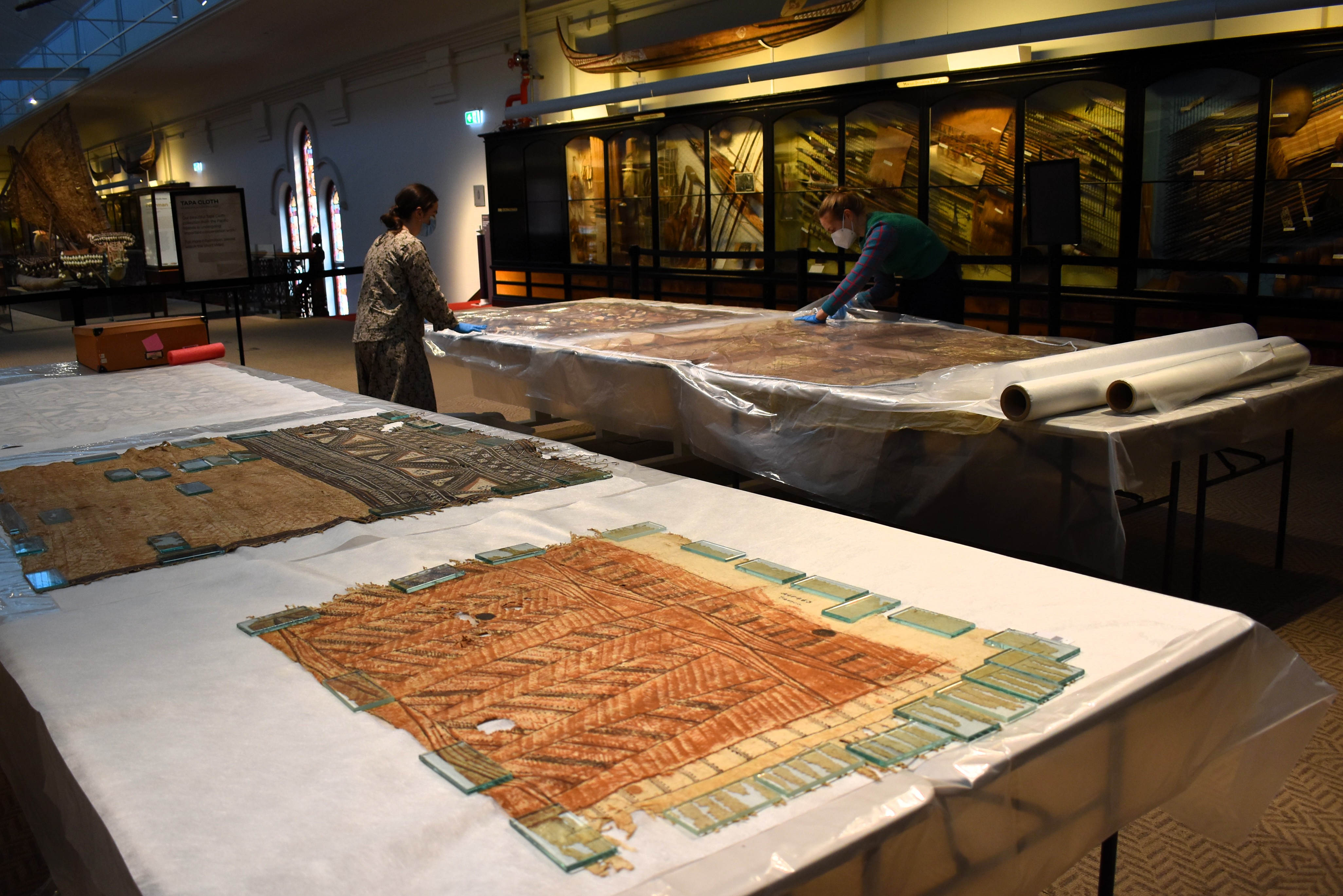
Some Tapa were preserved during public-facing work in the Museum’s Pacific Cultures Gallery and others at the Museum’s current storage facility in Netley.
“It’s been a huge job, and a team effort,” Mary-Anne said. “Given the quantity and the large sizes of some samples, the logistics have been quite challenging.
“We’re working to improve how we store the tapa and the CISF project has provided an excellent opportunity to do that.”
Stephen said the project undertaken by Artlab over the past three years was incredibly important.
“Not just because of the conservation and care that it brings to this asset,” he said. “Rolling the large textiles onto rollers also makes them more accessible.
“It’s one of the things I’m most looking forward to - sharing with our local Polynesian communities when we welcome them to the new collection facility.”
Follow the link for more information on the Pacific Cultures Gallery.


