By any stretch of the imagination, it’s a huge job.
Fitting thousands of crates and other priceless historic and cultural items into a brand new storage space – likened to a gigantic game of Tetris.
For the South Australian Museum, there was only one person for the job.
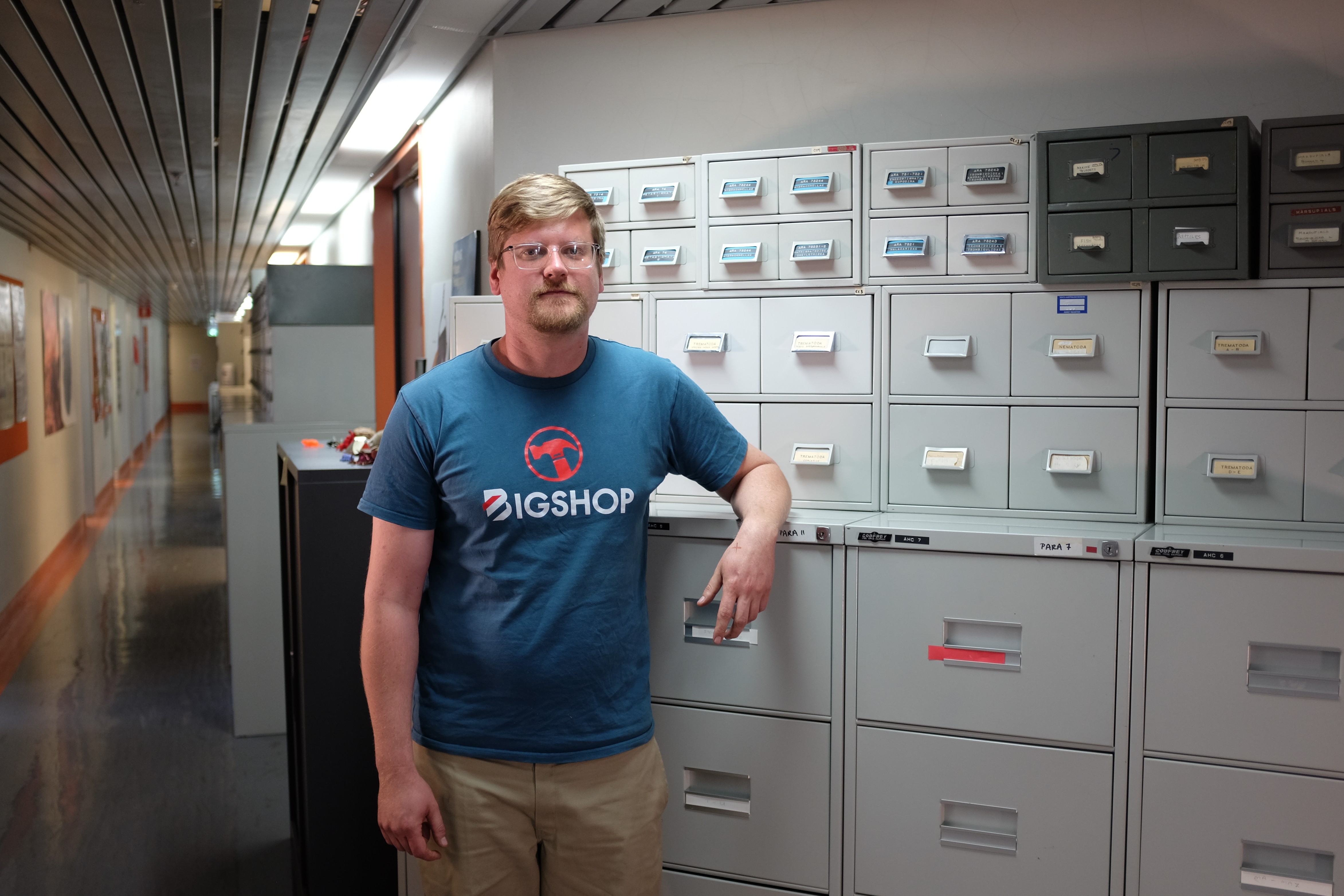
It’s industrial designer and Mr Fixit, Tom Pyrzakowski.
Tom (above), who normally works maintaining the Museum’s galleries, building exhibits and designing lighting solutions, now is working out how to fit the Museum’s collections into a new dedicated storage facility under the Cultural Institutions Storage Facility (CISF) project.
All the State’s cultural institutions including the Art Gallery of South Australia, the State Library of South Australia and the History Trust of South Australia are taking part in the project.
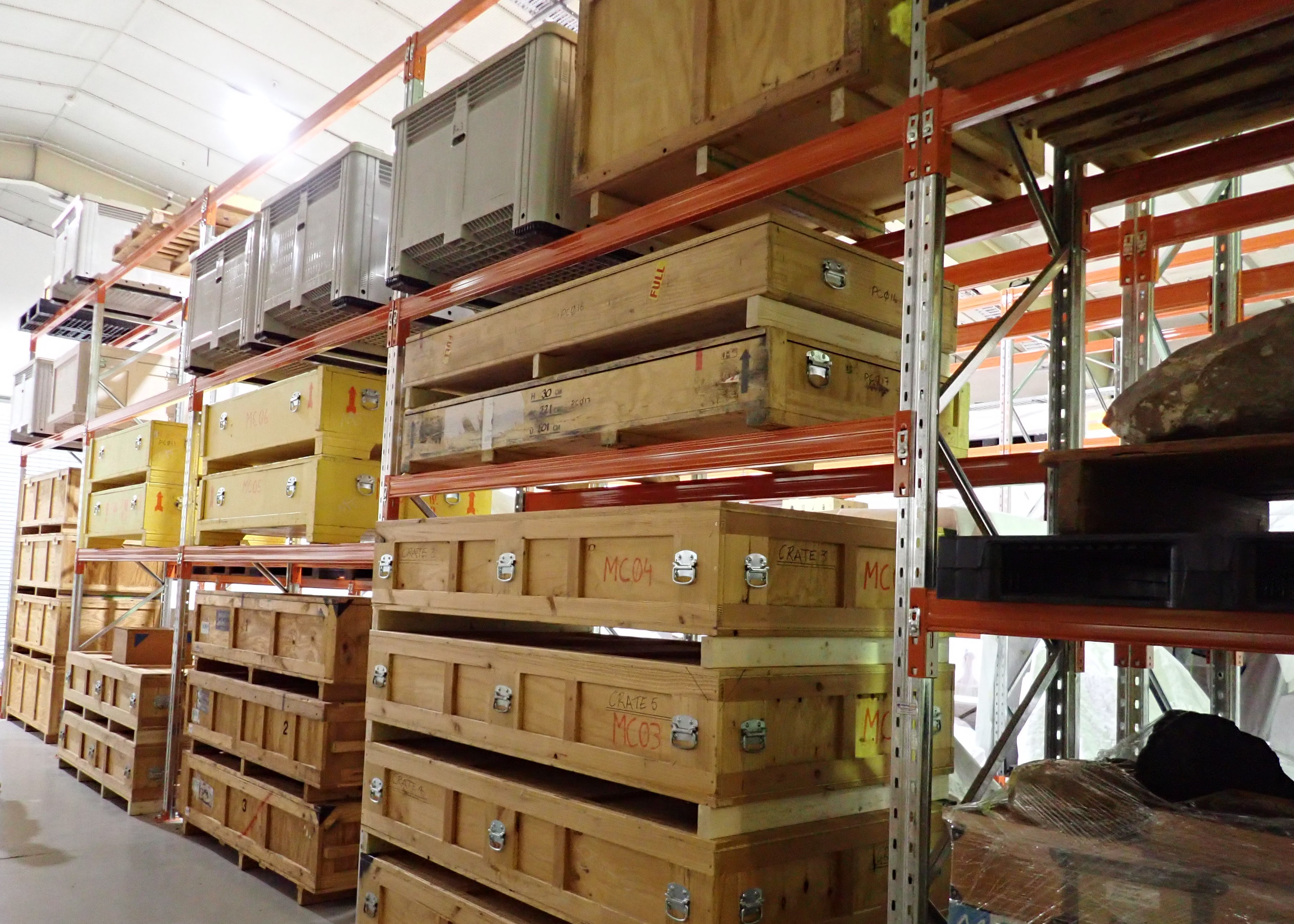
The Museum has the largest move by far, with hundreds of thousands of items that range from 6m-long canoes to tiny pieces of jewellery.
The collections team know the details of all the items and the shelf or cabinet each item needs to end up on in the new store. But working out how to arrange so many things so they all fit neatly was overwhelming without being able to see the final result, so they asked Tom for his help.
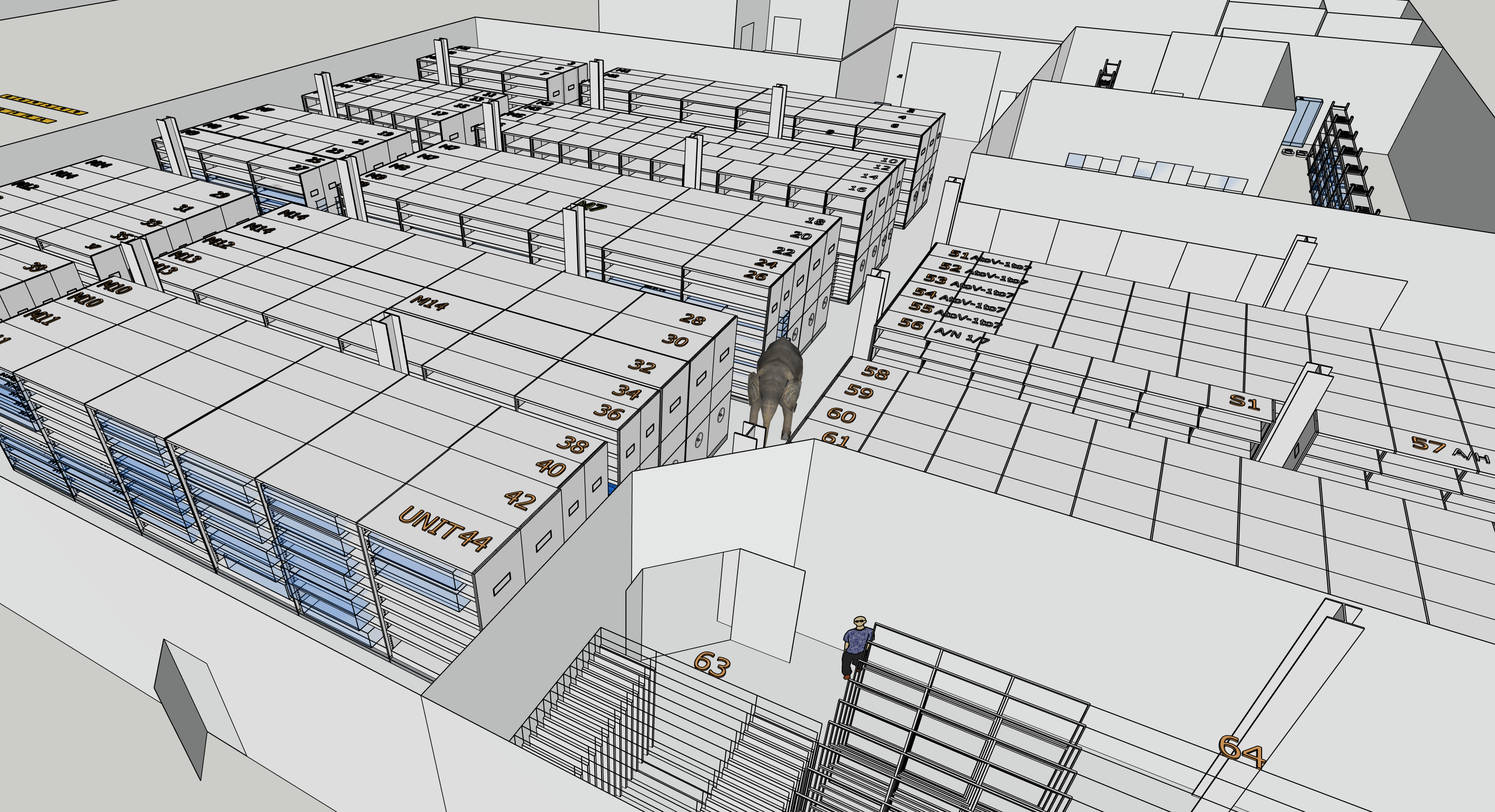
“My role is allocating our shelving in the new building,” he said, “because I can do the 3D modelling and visualise how itall works. It’s basically a giant game of Tetris.”

Tetris became all the rage in the late 80s and early 90s, but remains a strong favourite for gamers, having spawned 220 versions for more than 70 video game platforms.
The game involves dropping different shaped boxes to form a horizontal line. Each line disappears when full, and the goal is to stop the screen filling with boxes, all while they fall faster and faster.
Tom said his own 3D computer work on the shelving issue was a great help, particularly when so many boxes and other items were oddly shaped or proportioned.
“The modelling is as much for me as it is for other people involved in the move,” he said. “They can see what’s coming, and what goes where.”
Most, if not all the Museum’s staff, are involved in the move, which has led to the temporary closure in accessing collections until the job is completed late this year. The Museum’s day-to-day front-of-house exhibitions and galleries remain unaffected, and visitors are more than welcome.
Behind the scenes though, work is progressing on many fronts.
“We’ve gone through and had to physically measure every shelf; one shelf at a time,” Tom said. “I just wanted to turn the job into bite-sized pieces. We’ve estimated that there are 10,000 shelves.
“It’s been a huge challenge, and in the first few weeks I was just trying to get into a rhythm.”
Tom has developed a few tricks to give him a better idea of the task ahead.
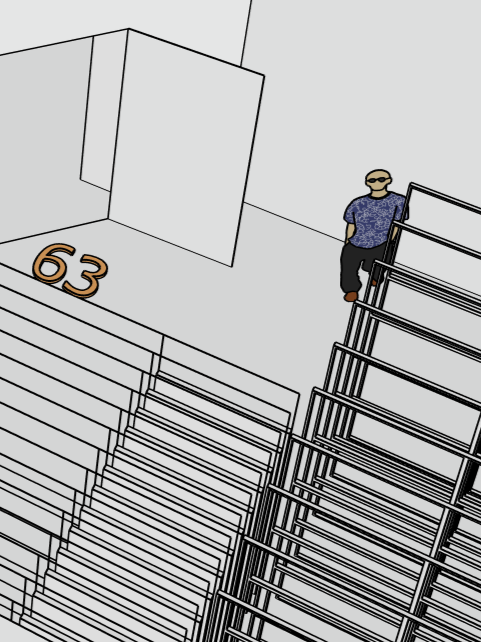
He uses an image of the Museum’s elephant Miss Siam (above, centre of diagram), and a “Mr Cool” image of its head of natural science collections, Keith Maguire (detail, right), to provide some sense of scale in the 3D renderings.
“They just provide a really good reference point,” he said. “I’m not sure Keith likes it though.
“He told me he doesn’t normally wear sunglasses.”
To read more about the Museum’s incredible collections, follow the link.


