.jpg)
Deb McKay was on a family holiday to the beach at Easter last year when the devastation of South Australia’s toxic algal bloom really hit home.
She’d watched the reports on the television news, and heard the stories of friends who lived by the sea.
But now she had seen it first-hand.
“I saw how the wildlife had changed,” she said. “The impact on the animals washed up on the beach – they were just ghosts.”
The horrible scene made her worry for the future of her grandchildren, so she set out to make a statement.
Deb (above, © Brenton Edwards), already an acclaimed ceramicist, started work on an entry for one of the country’s most respected and richest fine art competitions.
Her hauntingly beautiful piece in three parts, titled The Ghosts of our Coastal Water, last week won her the prestigious biennial 2026 Waterhouse Natural Science Art Prize.
She took home the $30,000 Open category, which is proudly supported by the South Australian Museum Foundation.
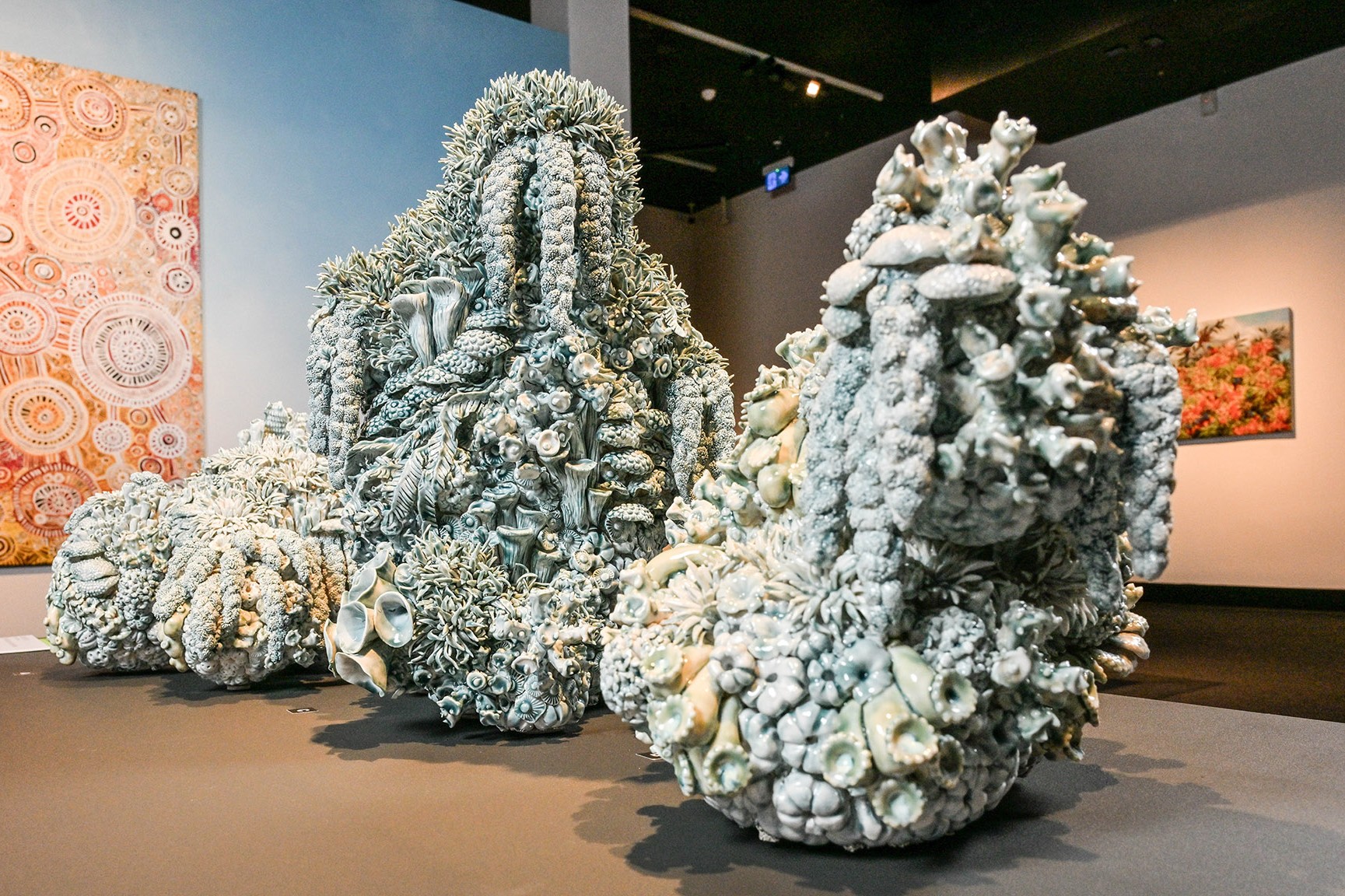
The porcelain piece is an incredibly detailed ceramic depicting the animals she saw washed up on the beach, victims of the algal bloom that is now in its second year.
“It was a labour of love,” Deb said of the piece. “I knew it had to be green, and I knew it had to represent the ghost-like creatures we saw.”
Ghosts took six months to complete. Each tiny animal part – and there were probably thousands of them - carefully and individually handmade.
The three sections were fired three times each, to obtain the depth of colour Deb hoped for in the glaze.
Every time Deb’s husband lifted them into and out of the kiln, there was a danger of damage.
“I couldn’t lift it,” Deb said. “Every part of the creative process was a risk.”
But for Deb, who only started working with clay in 2018, the risk was worth it.
“I’d always done things with my hands but as soon I touched clay I knew what I wanted to do,” she said. “I think it’s its malleability. Porcelain is very fine; it’s like building with wet talcum powder but it’s very strong.
“It’s something my hands love doing. If you’re having a bad day the clay knows; if you’re having a good day the clay knows. Porcelain is very fickle and if you’re mean to it, it’s mean to you. It’s certainly got a personality.”
Deb already had some good experience with the Waterhouse, winning its Emerging artist prize in 2022 with another marine-inspired and equally intricate piece in three parts – Fragile Forms.
.jpg)
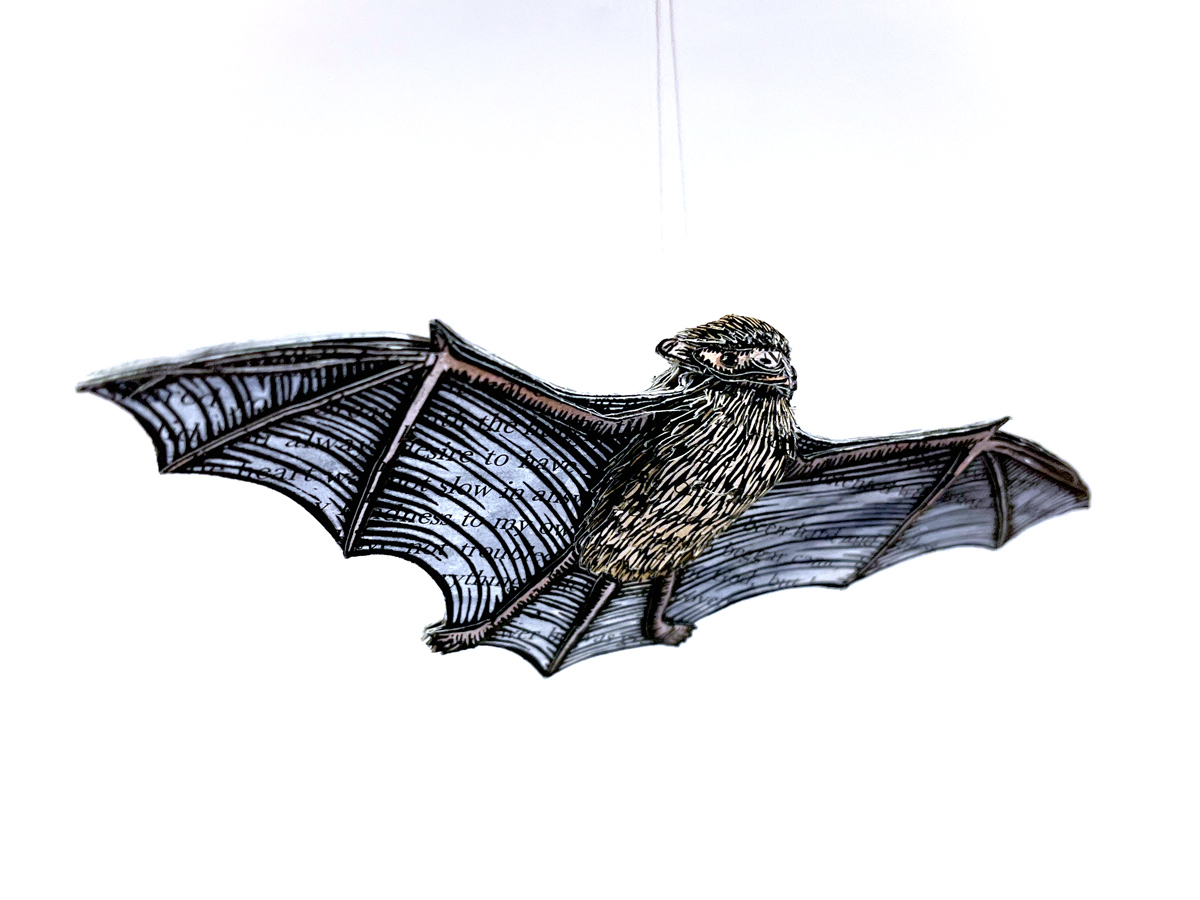
This year the Emerging category was won by Kat Parker from Shepparton in Victoria with her piece Discarded (Christmas Island Pipistrelle), a hanging life-size sculpture of the tiny bat frozen in flight.
The last call of this echolocating bat was recorded in 2009,and it has not been heard on the island since. Kat takes home $10,000 for the category, which is supported by Hill Smith Art Advisory.
Deb said the Waterhouse is the perfect place to present her work, which centres on quiet, creative activism.
“It’s a great opportunity, the Waterhouse,” she said. “It’s so well run by the South Australian Museum. It really looks after the artists.
“It’s the right environment for the right exhibition.”
Visit the South Australian Museum’s website for more information and to book for the 2026 Waterhouse Natural Science Art Prize Exhibition.
The exhibition runs until Sunday 19 July.


