When it rains it can sometimes pour … giant moths.
So much so that a single storm on 4 June 2023 near Geraldton in Western Australia revealed an incredible three new species.
Species that are commonly called, for obvious reasons, rain moths.
The new species have been described by the South Australian Museum’s Honorary Researcher Michael Moore and Senior Researcher in Terrestrial Invertebrates Mark Stevens.
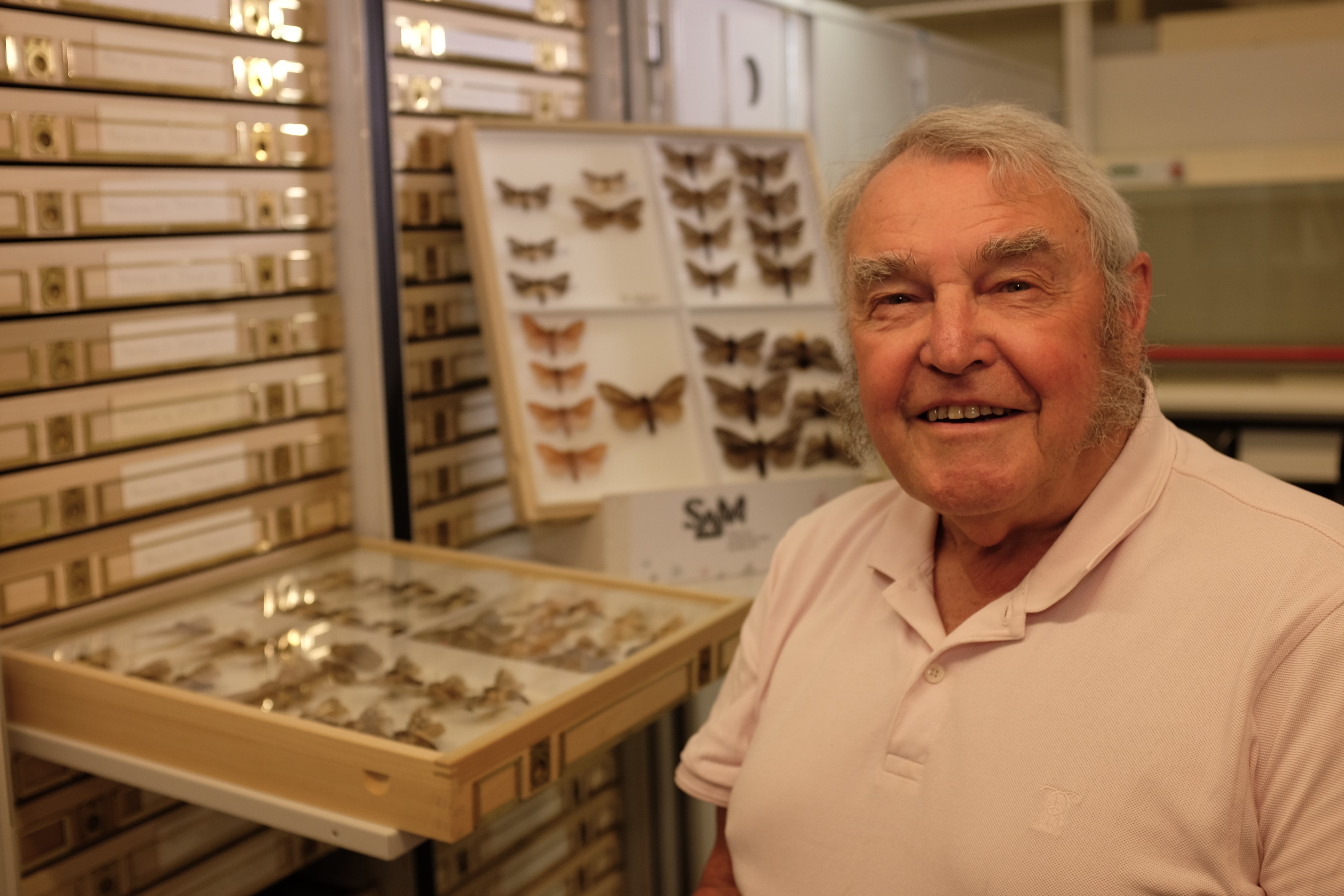
Michael, who has been studying moths with the Museum for the past 13 years adding 26 new hepialid species, said discovering three new species in a single location was an incredible experience.
“Unbelievable,” he said. “To catch just one is good, but to catch three in just three hours on one night, well, that’s amazing.”
“I knew two immediately were new species and the third – the pink one – I realised a few hours later when I looked at the antennae.”
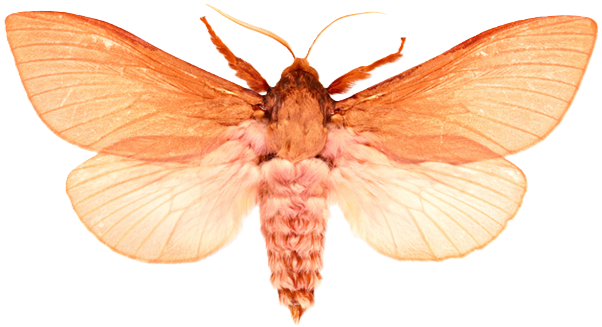
The three moths belong to the endemic Australian genus Abantiades, part of the ancient family Hepialidae, which features some of the world’s largest and heaviest moths.
They were collected the day after that storm at a single location at Kalbarri National Park, in low density woodland on a ridge line among sand dunes to the south of the Murchison River.

Rain moths can most often be seen emerging after rain events, usually in the Australian Autumn, or now more commonly because of climate change, in the early winter.
Upon emerging the caterpillars live in the leaf litter but when ready move underground, to hide in the soil or in the roots and stems of plants.
The mass emergence of the moths becomes a breeding frenzy, as they take advantage of the often sporadic and rare storms. Sometimes in more arid regions, the moths only get one opportunity to take flight.
Mark was first thrust into the world of moths when he and Michael were on an ABRS BushBlitz expedition to Hiltaba Nature Reserve on the western edge of the Gawler Ranges in 2012. Since then, Mark said they have been working together on a range of moth projects.
“With Michael’s expert knowledge of hepialid moths, we have been integrating taxonomy with molecular data,” he said. “For most species, like the five new Abantiades in this new research, the classic DNA barcode gene works well.
“The addition of DNA more widely in our collections also helps identify potential new species yet to describe and to define how widespread species may be.”
All up, the team’s new paper identifies five new species of Abantiades moth, including one from the Eastern Goldfield’s region of WA and another from South-Eastern Queensland.
That takes the total number of known species in Abantiades to 52.
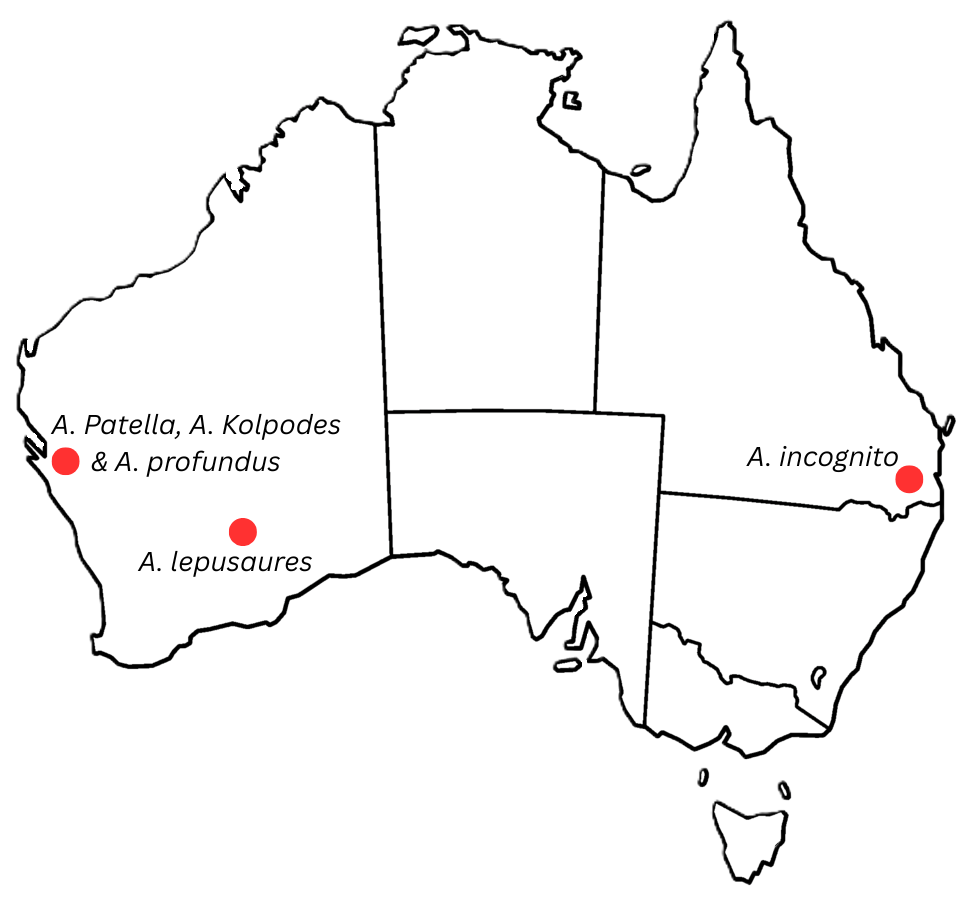
The Geraldton Sandplains Region, which covers 31,421km2, where three new species were found, now has 14 known moth species, six of which are likely found nowhere else.
Michael and Mark used taxonomic traits such as wing morphology, genitalia and antennal structure to identify the new species, which can be very similar in appearance.
They further compared the moths to all other known species of Abantiades using mitochondrial DNA (mtDNA) ‘barcode’ sequences, clearing up some taxonomic terminology glitches in the group along the way.

Unfortunately, the reliance on rain in the breeding cycle has created uncertainty when researchers try to accurately access the range of moth species, and much of what is known is based on sporadic historical records.
The limited information remains useful though – for example, distribution data has been important to identify moth ranges, both before and after fires over the summer of 2019-2020 that devastated wildlife on Kangaroo Island.

Michael remains optimistic about moths though.
“Without a doubt,” he said. “there’s many more to be collected. They can be out in their thousands after a storm; we just need to be at the right storm when it happens!”
The full research paper published in May 2026 titled Hepialid moth diversity in Australia further highlighted by five new species in the endemic genus Abantiades Herrich-Schäffer(Lepidoptera: Hepialidae) is free to access from the international journal Insects.
You can read about the South Australian Museum’s Terrestrial Invertebrate collection on its website.


