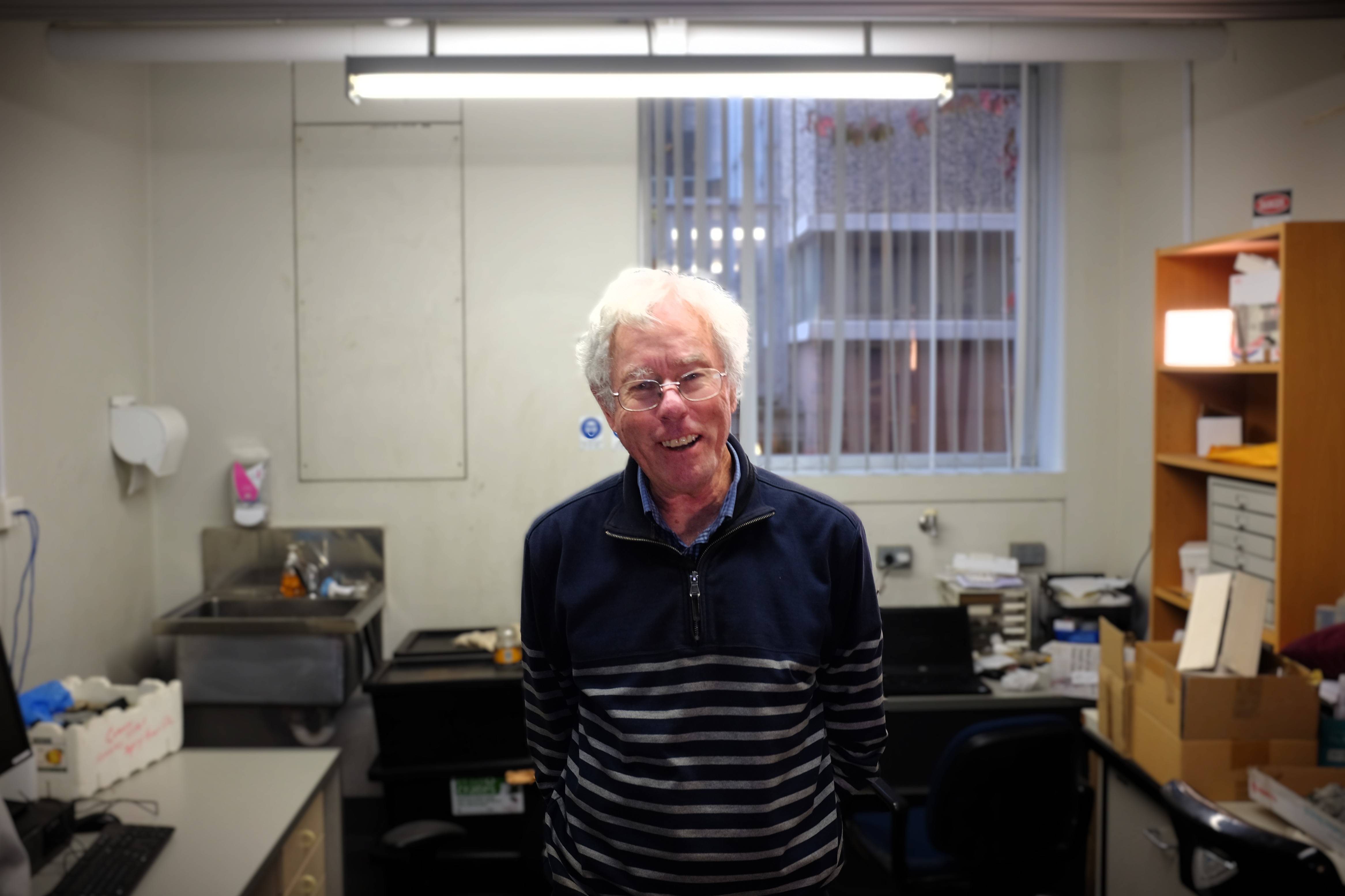
Peter Elliott may not like to admit it, but the mineralogist is at the heart of what it means to volunteer.
He’s given his time at the South Australian Museum as a volunteer in its Minerals Lab since 1984, and for the past 16 years since he obtained his PhD, as an Honorary.
Dr Elliott (above, in his lab) is being recognised this week along with the 59 other volunteers and 31 Honoraries as the Museum celebrates National Volunteer Week (18-24 May).
“I worked at Telstra and left 26 years ago,” he said. “I then went to study at Adelaide University in 2001.
“After I got my PhD, I started as an Honorary.”
Honoraries are unpaid academics who have a formal affiliation with the Museum to collaborate on research, access libraries, apply for grants and assist with our scientific work.
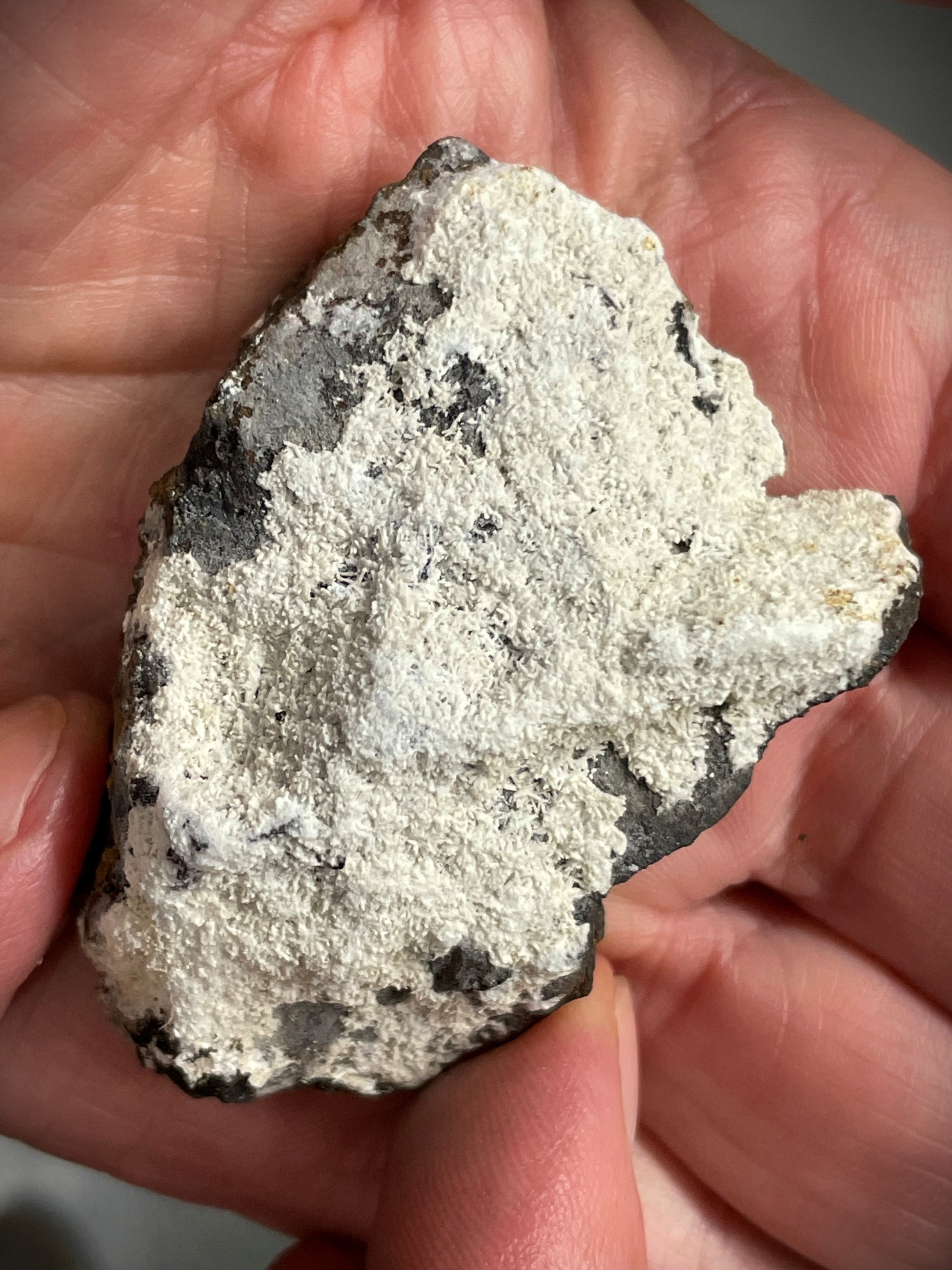
Dr Elliott puts in three days a week at the Museum and has so far identified 43 new minerals – that’s almost a quarter of all new minerals ever discovered in Australia.
One, a rare sodium magnesium aluminium phosphate fluoride, is named after him – elliottite.
National Volunteer Week recognises the contribution of millions of volunteers across the country and invites everyone to discover how giving their time and talents can create connection, purpose, and stronger communities.
The theme for 2026 is Your year to volunteer.
South Australian Museum Director Dr Samantha Hamilton said we all owed a great deal of gratitude to the volunteers and Honoraries like Dr Elliott who contribute to work and life at the Museum.
“Your efforts are woven through every part of the Museum, and you help us deliver a richer, more wide‑reaching service to the people of South Australia than staff alone could achieve,” she said.
“We’re also thrilled to draw on the knowledge of experienced community members, while proudly supporting the next generation of Museum professionals and scientists by offering meaningful opportunities to gain hands-on Museum experience as they progress through their studies.
“The vital role of volunteers and Honoraries in the Museum’s work is recognised by the Board in our Strategic Plan, which commits us to building a workplace where staff, volunteers and Honoraries feel genuinely valued, supported, and united by a shared mission.”
Dr Hamilton said the work of the Museum’s Honoraries was particularly important.
“You carry forward a proud tradition of Honorary scientists who have strengthened the Museum throughout its history, bringing a depth of expertise and experience that simply cannot be provided otherwise,” she said.


