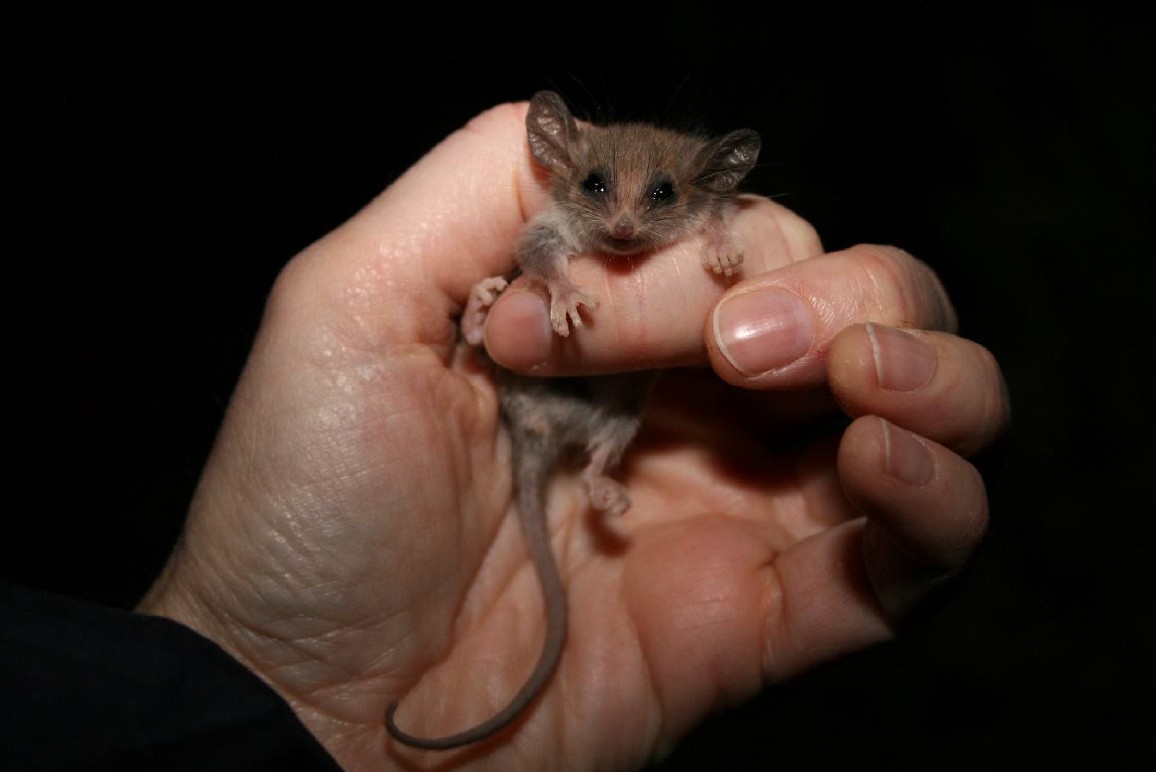
The tiny face stares back at the camera, seemingly unfazed by what must be confronting circumstances.
Snuggly wrapped in a giant but gentle hand.
Big black eyes, a cute little nose, and most tellingly, grey fur on its belly.
Could this decades-old photograph hint at a totally unexpected population of the enigmatic Little Pygmy-Possum (Cercartetus lepidus) at the tip of the Yorke Peninsula?
The possum (above; image: Sophie Petit) was captured way back in December 2006 in the Dhilba Guuranda-Innes National Park by Dr Sophie Petit, now at Adelaide University, and her students.
The students identified the little marsupial at the time as a juvenile Western Pygmy-Possum (C. concinnus), simply because nobody knew Little Pygmy-Possums existed in the area.
But that ID had nagged Dr Petit ever since.
Differences between the two possums are subtle – small variations in their faces and dentition, and the Little Pygmy-Possum has grey fur on its belly, compared to the Western Pygmy-Possum’s white or cream.
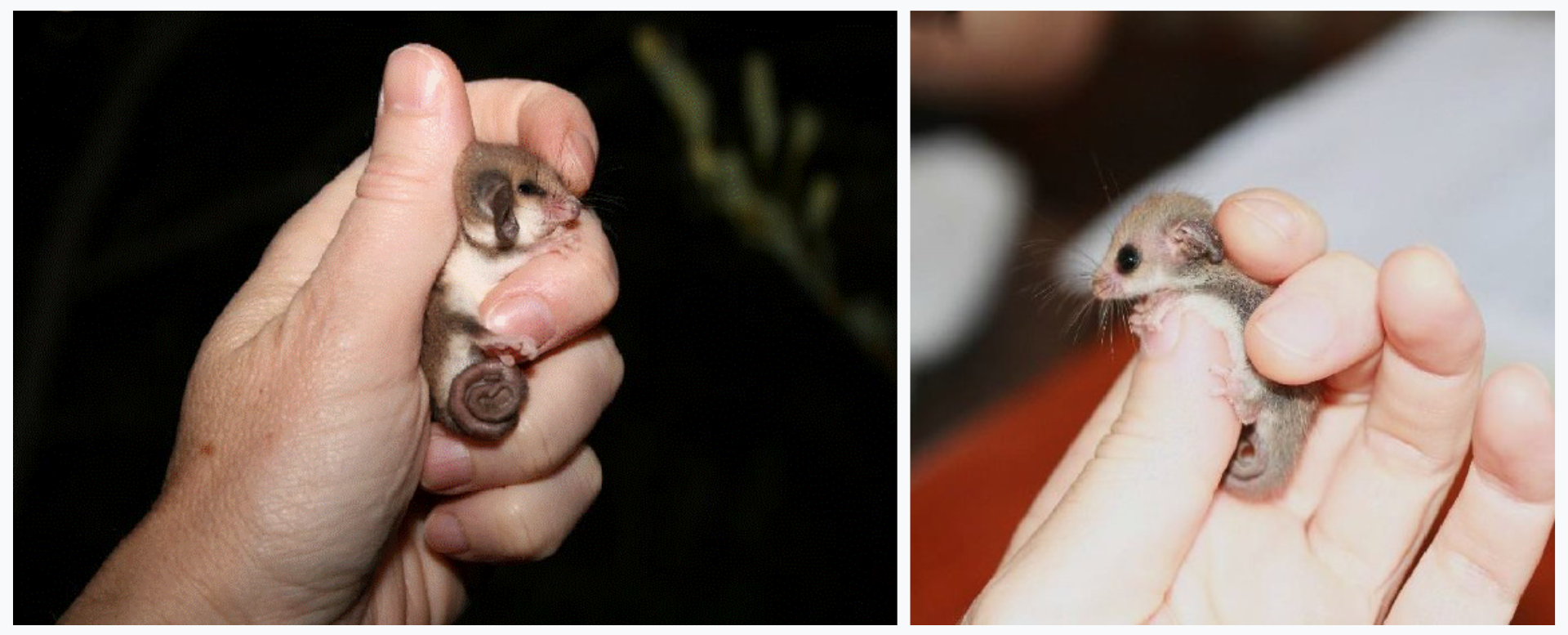
Associate Professor Petit has now, with co-author David Stemmer of the South Australian Museum, published a research paper speculating on an unknown relict population of Little Pygmy-Possums.
“I felt very strongly it was different,” she said of the specimen. “When you see enough Western Pygmy-Possums you can tell, even when you don’t look at the ventral fur. They don’t have the same face, but you can’t say that to a scientist.
“Had there been records of Little Pygmy-Possums for the Yorke Peninsula, it would have been different.”
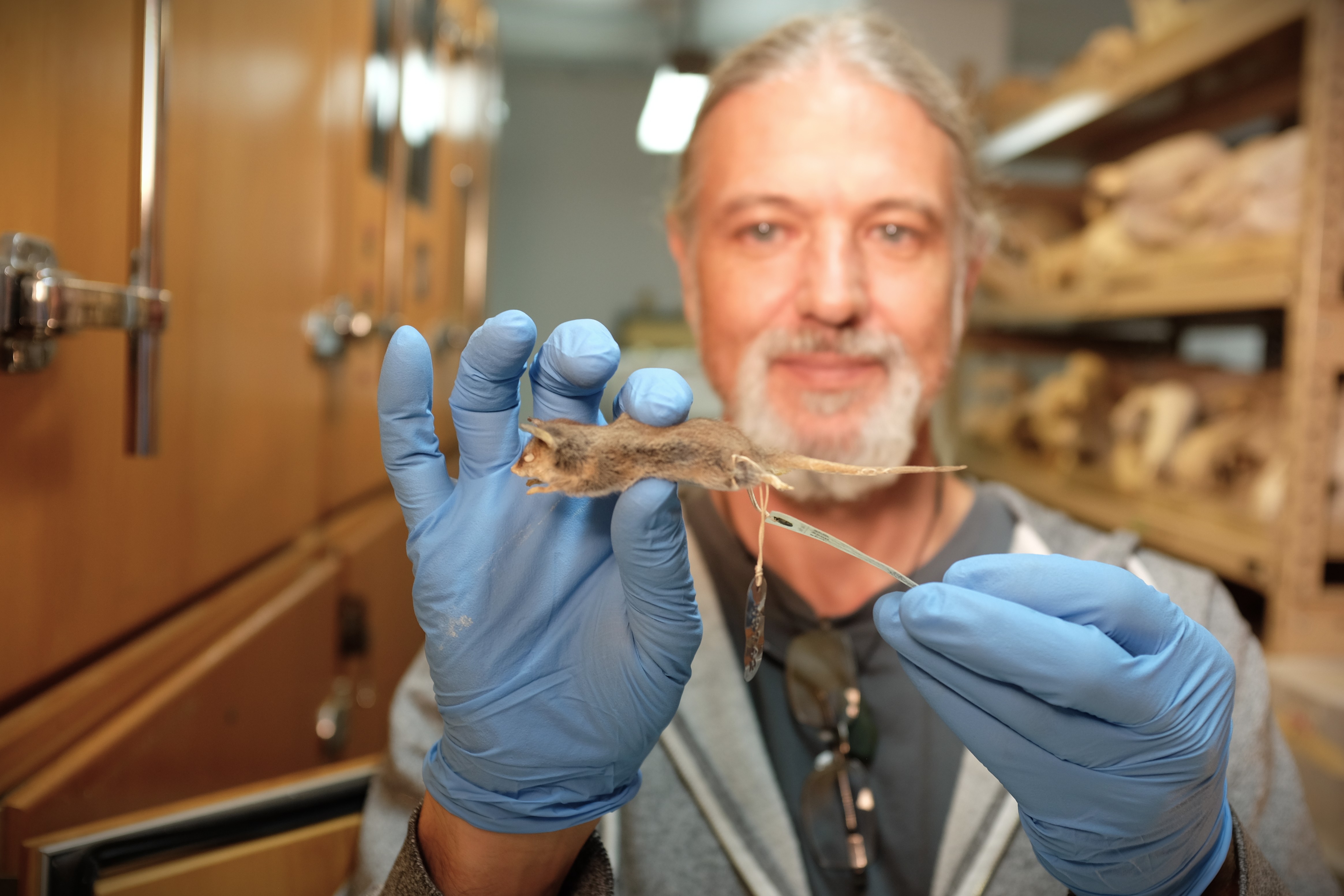
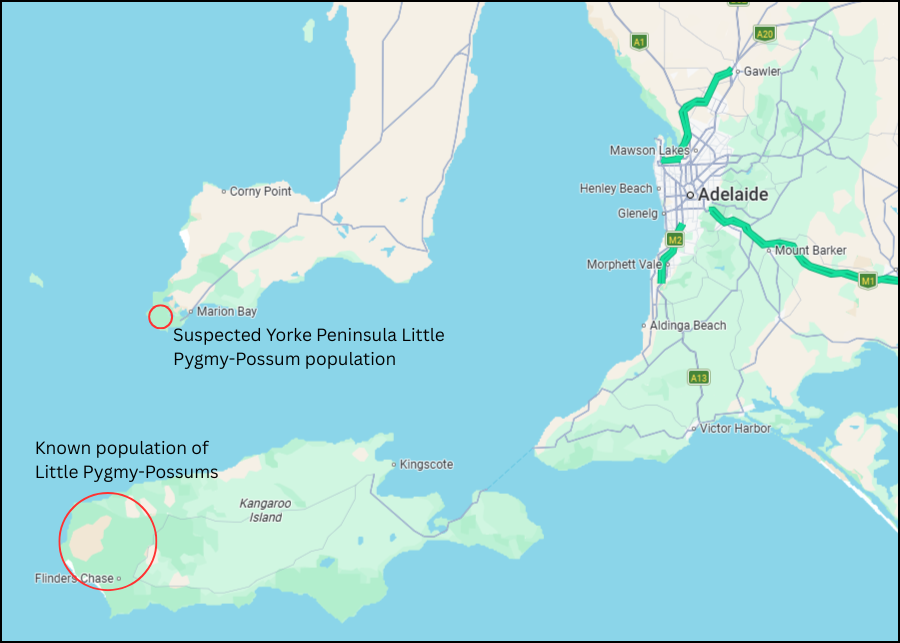
David Stemmer, who is the Museum’s Mammal Collections Manager, provided taxonomic support for Dr Petit. He said Little Pygmy-Possums can be found just a few kilometres across Investigator Strait on Kangaroo Island.
A land bridge connected the regions about 10,000 years ago, when sea levels were much lower.
“Littles tend to be in much smaller numbers,” Mr Stemmer said, “and the Westerns are usually much more abundant.”
Hence the importance of that 20-year-old photo, and the ability to compare it to the Museum’s specimens.
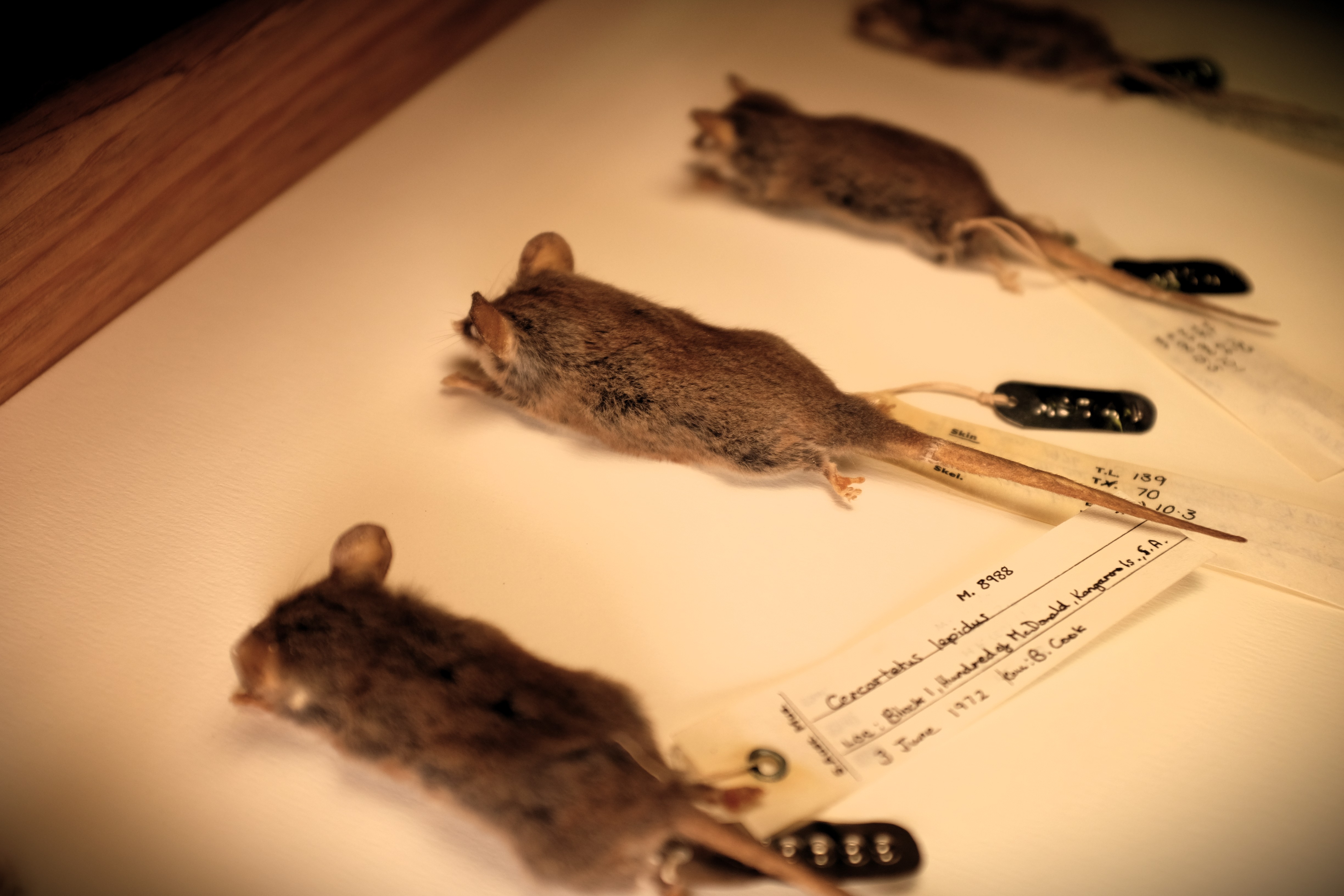
“The evidence is circumstantial,” Mr Stemmer admitted, “but a good photo is better than nothing. The low probability of actually catching one makes confirming it difficult.”
Dr Petit just hopes it’s not too late for the Little Pygmy-Possum at the tip of the Yorke Peninsula.
“I thought I really had to do something about it, because these animals are strongly affected by vegetation disturbance including fire,” Dr Petit said. “We can’t prove that they are on the Yorke Peninsula until we have genetic material, or a skeleton, or a specimen, but they need to be protected if they’re there, as soon as possible.
“David’s examination of the collection confirms that the grey ventral fur is a definitive characteristic of Cercartetus lepidus, and not a variation in colour of a C. concinnus.”
You can read the full research paper Is the Little Pygmy-Possum Cercartetus lepidus extant on the Yorke Peninsula of South Australia? at Australian Zoologist.
Learn more about the South Australian Museum’s Mammal Collection on our website.


