.png)
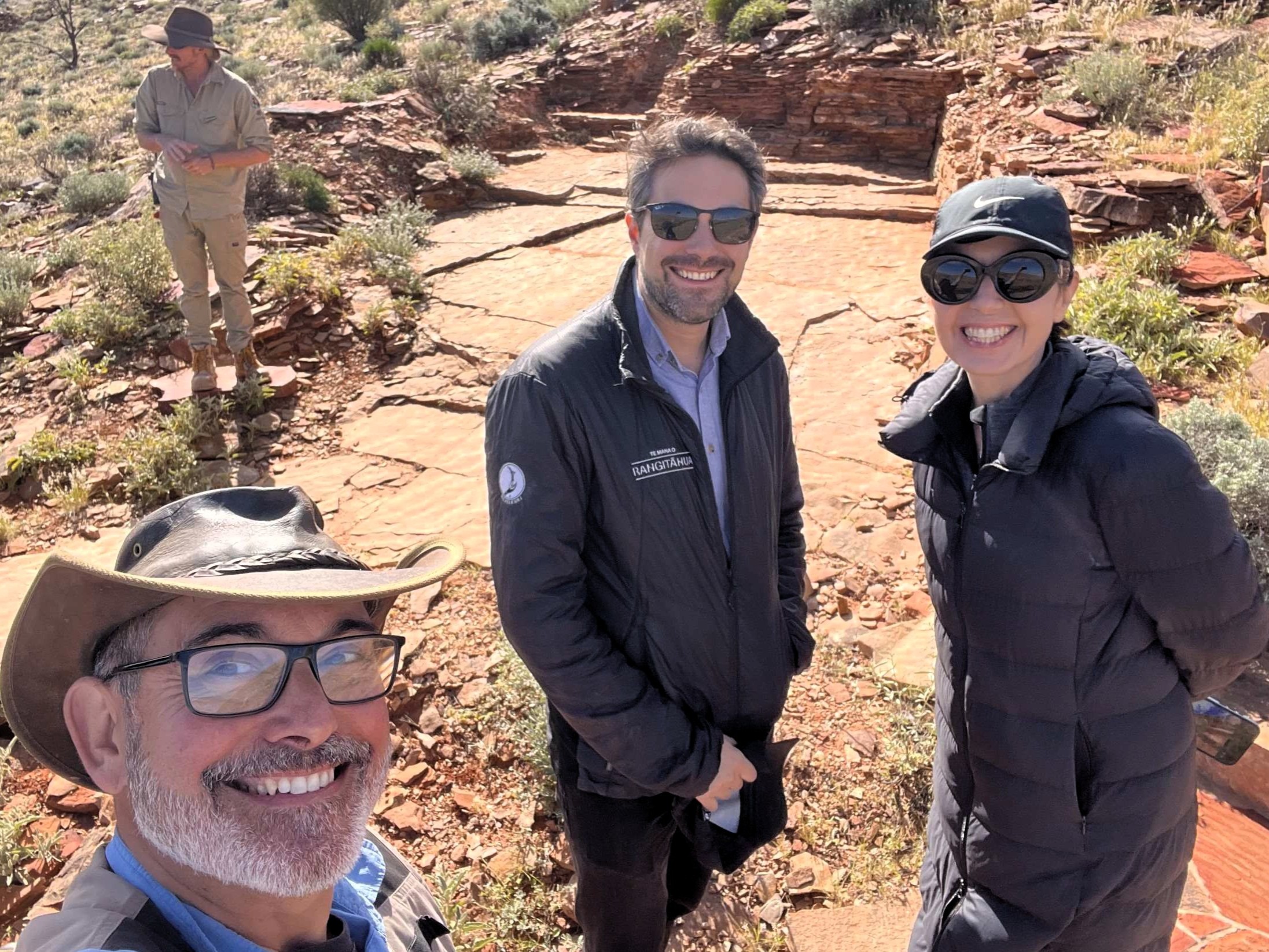
South Australian Museum Director Dr Samantha Hamilton has marked the 80th anniversary of the discovery of the Ediacara Biota with a visit to the 555-million-year-old fossil beds at Nilpena in the Flinders Ranges.
The Ediacara Biota, named for the Ediacara Hills, was discovered by SA Geological Survey researcher Reg Sprigg in 1946.
The discovery opened a window to a previously unknown world, when complex life first began forming on Earth.
.jpg)
The visit to Nilpena allowed Dr Hamilton to see first-hand the work being done by the Museum’s paleontological team, and to better understand the region which is being reviewed for UNESCO World Heritage listing.
“The fact alone that the Flinders Ranges and the Nilpena Ediacara National Park are being considered for World Heritage listing is testament to the importance of this remarkable landscape,” Dr Hamilton said.
“To come to Nilpena and see the work being done by the Museum’s Senior Researcher in Palaeontology Dr Diego García-Bellido and his team is incredible.
“Their impressive skill and knowledge are bringing along-lost world to life.
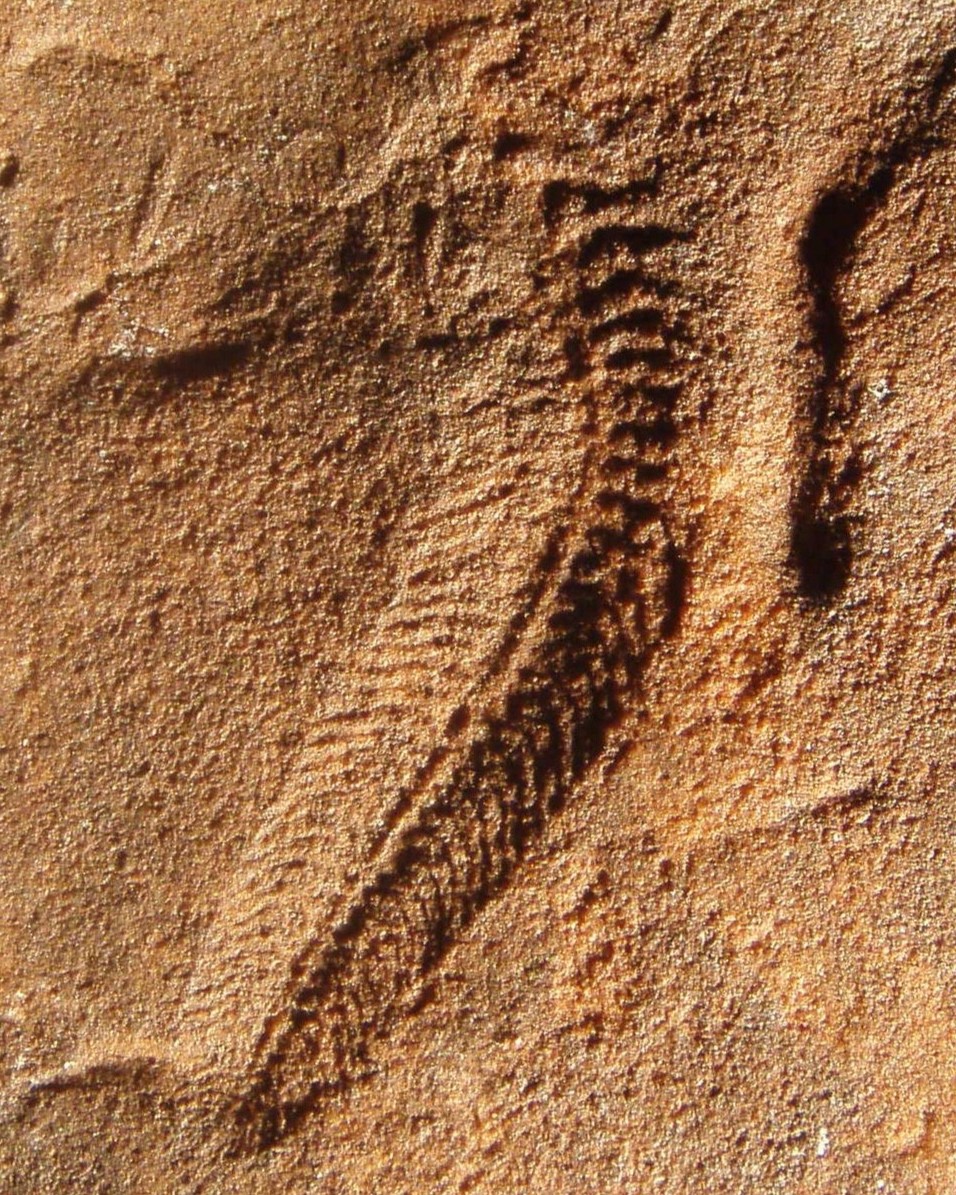
“At Nilpena, you can see these organisms - which began complex life’s long journey - in the rock. You can see how they lived, and the forms they took. Just amazing.”
Dr Hamilton started with the Museum last October and has since launched a new Strategic Plan and vision for the Museum, which is celebrating its 170th year.
Incorporated in this plan is a focus on delivering research that is of importance to South Australia and connects the Museum’s collections to discovery, learning and conservation. This fieldwork plays a crucial role in ensuring fossil beds and the knowledge gained from them are preserved for future generations.
“The Ediacaran research the Museum does is of world significance,” Dr Hamilton said. “It belongs to all of us.
“And we at the Museum are determined to make sure it is preserved, studied and understood as best as possible.”
Dr García-Bellido, also Associate Professor at Adelaide University, is the latest in a long line of South Australian scientists, starting with Sprigg, to research the fossil fields in Nilpena and Ediacara.
He said there’s been an ‘ebb and flow’ about how the Ediacara discovery has been interpreted over the years.
“When it was first discovered they put the biota into categories we already knew,” he said. “Then the feeling was that most of them weren’t animals.
“Now we think some are, some aren’t and some others were on the way to becoming animals, because by the Cambrian period which followed, all the animal groups were basically present.”

Dr García-Bellido said a key part of Reg Sprigg’s discovery was that it essentially solved the so-called Darwin’s Dilemma.
The great evolutionist was puzzled by the sudden appearance of life in the Cambrian Period 540 million years ago, because there was no evidence in the fossil record that any animals came before it.
Darwin even went as far to acknowledge the lack of evidence was the most valid argument against his Theory of Evolution, outlined in his 1859 publication On the Origin of Species.
But Spriggs’ discovery of the Ediacaran fossils, almost a century later in 1946, finally found the organisms that could have given rise to the later Cambrian animals.
“Before the Ediacara, there was basically a line in the fossil record at the Cambrian,” Dr García-Bellido said. “But with Reg’s discovery, those animals no longer just appeared out of the blue.
“And the reason it’s named the Ediacara “Biota” and not the Ediacara “Fauna” is because among them are other organisms besides animals.”
.jpg)
Dr García-Bellido said while older Ediacaran fossils have been found elsewhere in the world, the South Australian specimens can be excavated, are more diverse and, being preserved in sandstone, are among the most durable.
“Not many people can do what we do,” he said. “We can just turn the rocks over and let people come and take a look at them. We have the best fossil site in the world to study the Ediacaran.”
.png)
Dr García-Bellido expects many more discoveries to come out of the Nilpena fossil fields, adding there is plenty more to uncover for future generations of researchers.
“Just about every time we go up there (to Nilpena) we find new species,” he said. “We’re limiting how much we’re excavating.
“Now, it’s about scientifically describing what we’ve found. What I want to learn next is: to what level do we see these organisms interacting with each other?
“Do we see evidence of them evolving and at what pace because, in the absence of predation, there’s not much reason to.”
You can view the Ediacaran Fossil Gallery at the South Australian Museum, or learn more by visiting our website.


