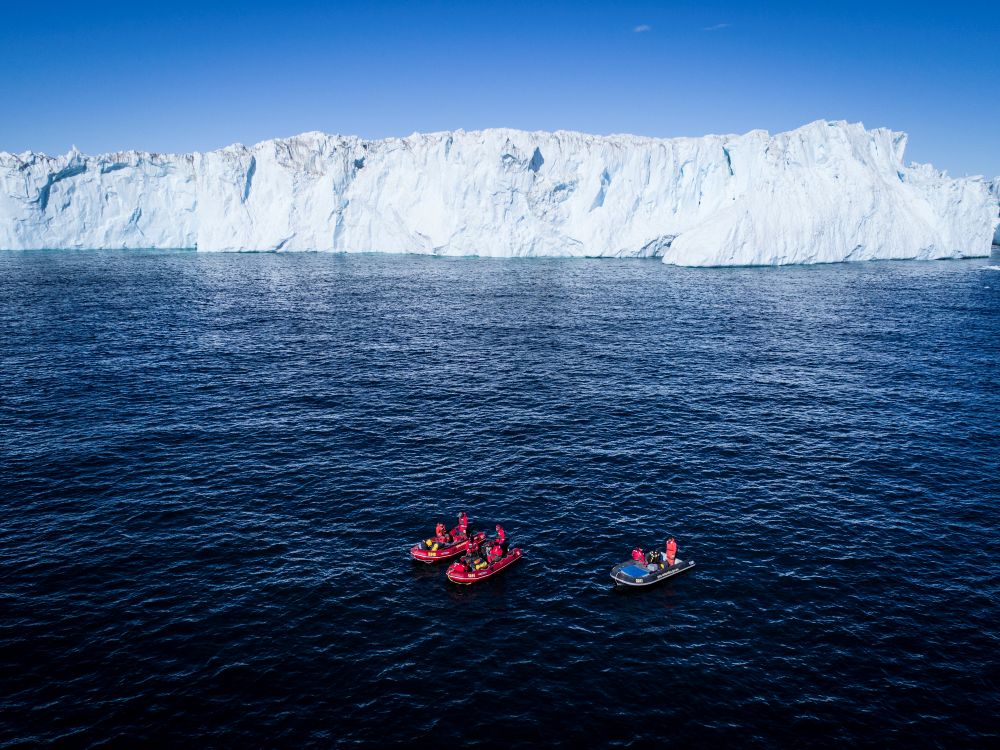
A new virtual reality experience at the South Australian Museum will transport visitors to Antarctica, immersing them in one of the planet's most extraordinary and remote environments through the eyes of a research scientist.
Using 360-degree VR technology and high-resolution imagery, The Antarctica Experience: A Virtual Reality Expedition offers a firsthand glimpse into the challenges, discoveries and wonders of life and research on the icy continent.
Visitors will explore Antarctica from a helicopter cockpit, cruise cold waters through remote bays, come face-to-face with wildlife, witness vast glaciers and marvel at the spectacular Southern Lights, all without leaving Adelaide's CBD.
The ticketed, immersive experience was created by Western Australian filmmaker Briege Whitehead of White Spark Pictures, in partnership with BAFTA award-winning director Phil Harper, known for David Attenborough's Great Barrier Reef VR Dive.
It is narrated by Australian actor David Wenham who has starred as Faramir in The Lord of the Rings trilogy, Lieutenant John Scarfield in Pirates of the Caribbean: Dead Men Tell No Tales and Hank Snow in Elvis.
The exhibition complements the South Australian Museum's internationally significant Mawson Collection, which comprises more than 100,000 items belonging to Sir Douglas Mawson—one of the country’s most celebrated geologists, scientists and Antarctic explorers.
The Antarctica Experience: A Virtual Reality Expedition is on from Saturday 21 November 2026 until 14 February 2027 at the South Australian Museum’s Science Centre. From $18.
For more information visit https://whatson.samuseum.sa.gov.au/events/the-antarctica-experience
Comments attributable to South Australian Museum Director, Dr Samantha Hamilton
The Antarctica Experience: A Virtual Reality Expedition reflects the South Australian Museum’s commitment to making science accessible, engaging and relevant for all South Australians.
It showcases how technology can break down barriers to discovery, giving unprecedented access to one of Earth’s most significant scientific frontiers.
As we approach the 70th anniversary of Davis Station in January, The Antarctica Experience: A Virtual Reality Expedition provides a timely opportunity to recognise the remarkable contributions of Antarctic researchers and expeditioners, both past and present, whose work continues to advance our understanding of the planet.
The exhibition also reinforces the Museum’s commitment to STEM learning. Alongside major exhibitions, such as CURIOSITY: Building Breakthroughs in LEGO® Bricks that will launch next month, it uses innovation and immersive technology to inspire the next generation of scientists, engineers and problem-solvers while fostering lifelong learning.
Comments attributable to White Spark Pictures Founder and Creative Director Briege Whitehead
The Antarctica Experience was created to take audiences somewhere truly extraordinary, allowing them to experience the beauty, scale and wonder of Antarctica in a way that traditional cinema simply cannot replicate.
Through immersive storytelling, we can transport people to places they may never otherwise have the opportunity to visit, creating a powerful sense of connection with the natural world.
We're thrilled to be partnering with the South Australian Museum to bring this experience to Adelaide and introduce a whole new audience to the possibilities of immersive cinema.
The season will offer Museum visitors, families, students and audiences an exciting new way to explore Antarctica, complementing the Museum's commitment to inspiring curiosity, discovery and engagement with the natural world.
Comments attributable to Grandson of Sir Douglas Mawson, Alun Thomas
My grandfather, Sir Douglas Mawson, led expeditions that reshaped our understanding of Antarctica. Now digital innovation is giving people an extraordinary new window into his research and the importance of scientific discovery and lifelong learning.
My grandfather was driven by curiosity and a desire to expand human knowledge. He was always keeping up with the latest technology. He was, for instance, the first to use radio communication from Antarctica to the rest of the world.
I think he would be fascinated to see how advances in digital technology are now helping people engage with Antarctic science and exploration through experiences that are both educational and deeply personal.
For our family, it's incredibly special to see this exhibition presented in a way that feels so immediate and engaging. Technology is helping bridge the gap between past and present, giving audiences a deeper appreciation of the remarkable achievements of Antarctic exploration.


