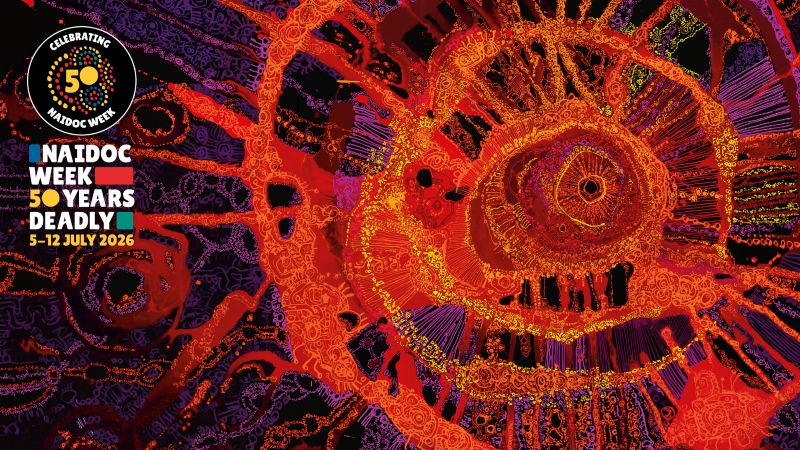
NAIDOC Week at the South Australian Museum this year (5-12 July) will be marked with a free exhibition celebrating 50 Years of Deadly: Moments and Movements.
50 Years of Deadly, which includes an extensive display in the Museum’s foyer and supporting exhibition in the Australian Aboriginal Cultures Gallery, features the NAIDOC Week posters dating back to the commemoration’s inception in 1975.
Each poster represents a different era of Aboriginal and Torres Strait Islander activism. While some posters represent specific moments, many reflect continuous themes around culture, family, resistance and Country.
All stories speak back to the origin of NAIDOC Week. The supporting exhibition in the Gallery investigates themes captured in some of the posters such as Moments and Movements and Women, Children, Elders, Families.
The Museum has also partnered with the Women’s and Children’s Hospital to present an accompanying video on featuring Aboriginal voices, speaking about what NAIDOC Weekand 50 Years of Deadly means to them.
During NAIDOC Week, Museum visitors can join in for:
Posters and Power school holiday workshop (ages 12-17 years)
Learn all about how posters have been used through our history to share messages and promote social change.
In this two-hour workshop for teens, you will hear from Museum researcher Jacinta Koolmatrie talk about 50 years of NAIDOC Week posters, before a visit to the Centre of Democracy for an exclusive tour with curator Amy Morrison about political posters and badges from South Australia's history.
Each person will then get the chance to put their own powerful poster and badge together on a topic of their choice.
This workshop is for children aged 12-17 years. Parental supervision is optional. Booking is essential.
Thursday 9 July, 10:30am to 12:30pm
$20 per child
NAIDOC Chatterbox
A free, drop-in activity for school-age children, to engage with NAIDOC Week. This activity will be held in the Museum’s foyer and will run throughout the week.
Family Learning Area
Drop into the Museum’s Learning Space on Level 2 to connect with culture. Families can share stories from our reconciliation library and sing, play or dance along to First Nations learning videos.


